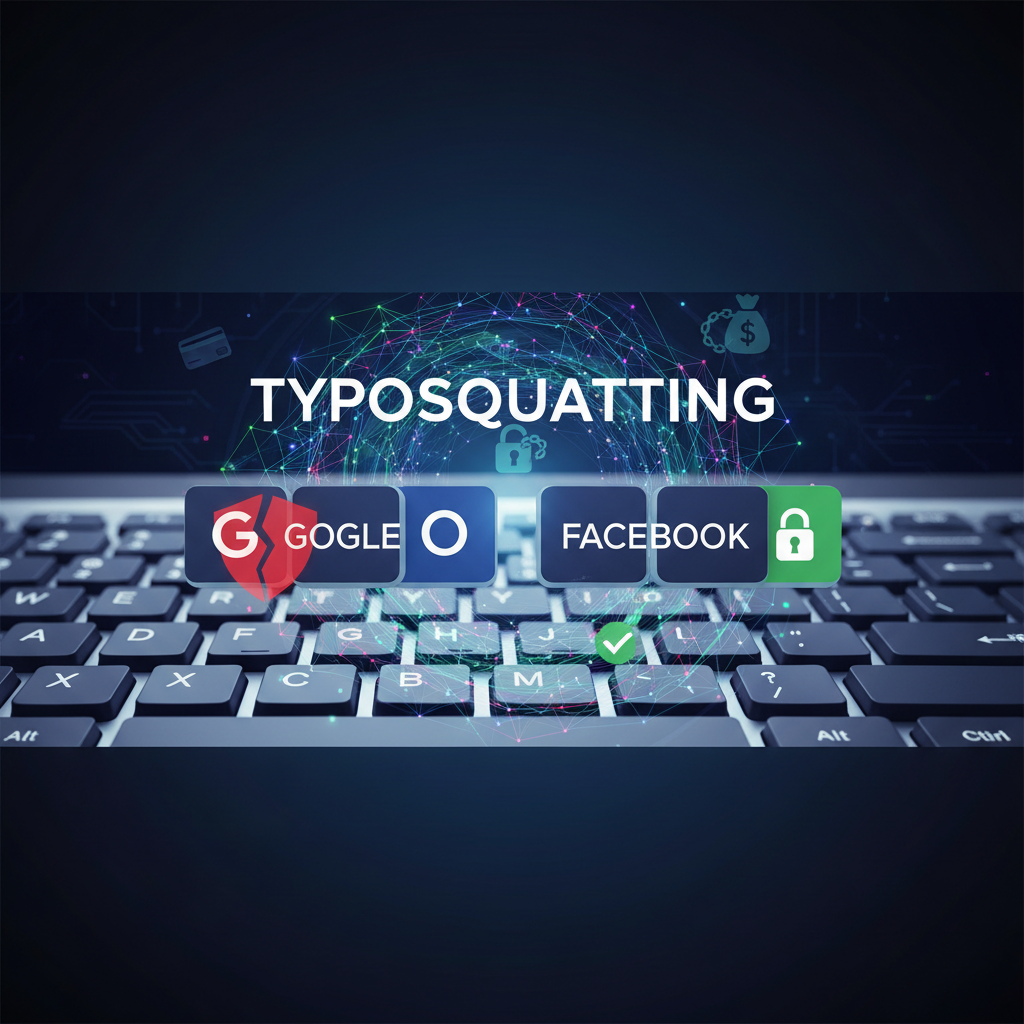
Typosquatting: Why One Wrong Character Can Cost Your Business Everything
Have you ever sat down at your desk, ready to pay a bill or check a vendor's website, and accidentally typed 'gogle.com' instead of 'google.com'? Or perhaps 'faceook.com' instead of the intended social giant? Most of us have. It is a simple, human mistake—a slip of a finger on a keyboard or a moment of distracted typing. While it usually just results in a 'page not found' error, for businesses, these tiny errors are a goldmine for cybercriminals. This practice is known as typosquatting, and it is a growing headache for companies of all sizes.
At its core, typosquatting (also known as URL hijacking) is a form of social engineering where an attacker registers a domain name that is a common misspelling or variation of a popular brand. Their goal is simple: to capture traffic from users who make a typo. Once a user lands on the wrong site, the consequences can range from annoying advertisements to devastating data breaches.
The Anatomy of a Typosquat
Cybercriminals are surprisingly creative when it comes to predicting our mistakes. They don't just guess; they use algorithms to identify the most likely typos people will make. Here are the most common methods they use:
- Typographical Errors: This is the classic misspelling, like omitting a letter (amzon.com) or swapping two adjacent keys (wimndows.com).
- Homoglyphs: This is a more sophisticated trick. Attackers use characters from different alphabets that look identical to Latin characters. For example, a Cyrillic 'a' looks exactly like an English 'a' to the naked eye, but it leads to an entirely different server.
- Combosquatting: This involves adding a relevant keyword to a brand name, such as 'login-microsoft.com' or 'verification-paypal.com.' These often look official to an untrained eye.
- Wrong Top-Level Domain (TLD): Registering 'yourbusiness.net' or 'yourbusiness.co' when you actually own 'yourbusiness.com.'
Why This Is a Nightmare for Your Business
For a business, typosquatting isn't just about losing a bit of web traffic. It’s about the erosion of trust. If a customer tries to reach your site and ends up on a page filled with malware or adult content, they might associate that negative experience with your brand.
More dangerously, typosquatting is the primary vehicle for phishing. An attacker can create a perfect clone of your login page on a squatted domain. A customer or employee, not noticing the slight URL error, enters their credentials. Just like that, the attacker has a username and password to your internal systems or your customers' financial data. According to the FBI IC3 2023 Report, phishing remains the most prevalent threat reported by the public, with losses totaling billions of dollars annually.
The Rising Scale of the Problem
The scale of this issue is reflected in the rising number of legal disputes. The World Intellectual Property Organization (WIPO) handles thousands of cases every year where brands try to reclaim hijacked domains.
| Statistic | Data Point |
|---|---|
| Record WIPO Cases | 5,616 domain disputes in 2022 |
| Increase over previous year | ~10% rise in filings |
| Success Rate | Over 80% of cases favor the brand owner |
| Primary Motivation | Phishing and Malware Distribution |
As noted in the WIPO 2022 Case Statistics, the rise in digital activity has led to a record-breaking number of domain name disputes, showing that criminals are becoming more aggressive in targeting corporate identities.
How to Defend Your Digital Perimeter
You might feel like you can't control what people type into their browsers, and that's true. However, you can control how you protect your brand's digital presence. Here are several practical steps we recommend for any business looking to secure their reputation:
- Defensive Registrations: The best defense is a good offense. Identify the top five or ten most likely misspellings of your domain and buy them yourself. Then, set up a 301 redirect so that if someone types the wrong URL, they are automatically sent to the correct one.
- Monitor Your Brand: Use domain monitoring tools that alert you whenever a domain similar to yours is registered. Early detection allows you to take action before the attacker can launch a phishing campaign.
- Employee Awareness Training: Your team is your first line of defense. Train your staff to double-check URLs before entering credentials, especially when clicking links in emails. The CISA Phishing Guidance offers excellent resources on how to spot these deceptive tactics.
- Implement DMARC and SPF: These email authentication protocols help prevent attackers from using your domain (or a look-alike) to send fraudulent emails that appear to come from your executive team.
- Trademark Protection: Ensure your brand is legally trademarked. This gives you a much stronger legal standing if you ever need to file a Uniform Domain-Name Dispute-Resolution Policy (UDRP) case to seize a malicious domain.
Final Thoughts
In the grand scheme of cybersecurity, typosquatting might seem like a small detail. But as we've seen, those small details are exactly what hackers exploit to bypass expensive firewalls and sophisticated encryption. It leverages the most unpredictable element of any business: human error.
Protecting your business from typosquatting isn't just a technical task; it's a commitment to your customers' safety and your brand's integrity. By being proactive and securing your digital footprint today, you can ensure that a simple slip of the finger doesn't turn into a catastrophic security breach tomorrow. If you're not sure where your brand stands, reach out to an IT partner who can help you audit your domain presence and set up the right protections.
Need Expert Help?
Root-InfoTech specializes in IT solutions for businesses. Whether it's cybersecurity, managed IT services, data protection, or custom web development, our team is here to help your business succeed. Let's discuss how we can support your organization.
Get In Touch →